
The Fort McKay–Suncor relationship shows how trust, community priorities and Indigenous ownership can support responsible resource development
First Nations are seeking a greater role in shaping Canada’s energy future, moving beyond employment, procurement and revenue sharing toward ownership and a more direct say in how resource projects are developed.
That shift was reflected at the Oct. 26 meeting between First Nations leaders and Canada’s first ministers, where participants agreed to develop new revenue-sharing mechanisms, including the potential creation of a First Nations Sovereign Wealth Fund.
Indigenous participation and ownership were also prominent themes at the Spark Indigenous Energy Summit, hosted by the Tsuut’ina Nation at the Grey Eagle Convention Centre in Calgary. Speakers discussed how economic reconciliation involves more than jobs, contracts and revenue sharing. It also means giving First Nations a greater role in developing resources and sharing in the benefits.
Jean-Paul Gladu, founder and principal of Mokwateh, an Indigenous-owned consulting firm, told the summit that companies need to understand a First Nation’s priorities before making investment decisions.
Gladu, who also serves on Suncor’s board of directors, moderated a panel discussion with Chief Raymond Powder of Fort McKay First Nation and Peter Zebedee, president and chief financial officer at Suncor Energy Inc.
Fort McKay First Nation has worked with Suncor for decades, dating back to the Great Canadian Oil Sands era. Powder praised the company’s willingness to listen to the Nation’s concerns and discuss economic opportunities.
“It doesn’t happen just because we want it to happen,” Zebedee said. “It happens because we develop relationships as we do in normal life, and it happens because when we speak words, they’re met with actions.”
For Zebedee, trust grows when companies follow through on their commitments. He described how relationships can progress from consultation to employment and procurement, and eventually to equity partnerships in which First Nations acquire an ownership stake in a project.
“I think the future is really up to us. What more is possible? How can there be more Indigenous leadership in the future of Canada and the development of the resource that is so precious to all of us?” he said.
Consultation gives First Nations an opportunity to influence development decisions, while ownership provides a direct financial interest in the project.
For Fort McKay First Nation, those economic opportunities are closely connected to protecting its lands, environment and traditional livelihoods. “How do we actually preserve the moose, the fish, and all that we sustain?” Powder said. “We do it through our land management, and that’s how we actually address the impacts.”
Powder also described how development revenue helps the Nation address community needs. He pointed to Fort McKay’s paved roads, sidewalks and newer buildings, including 49 homes built over four years. For the Nation, protecting traditional livelihoods and improving community infrastructure are both important considerations in resource development.
Fort McKay First Nation is also exploring opportunities to develop oil sands resources on Reserve 174C, land designated for the Nation under a 2003 treaty land entitlement agreement. Powder said more than 90 per cent of members subsequently supported using the land for resource development.
The Nation established the Fort McKay Oil Sands Development Company to pursue those opportunities. Because preliminary assessments found that a stand-alone mine would not be economically viable, development would require a partnership with an existing operation.
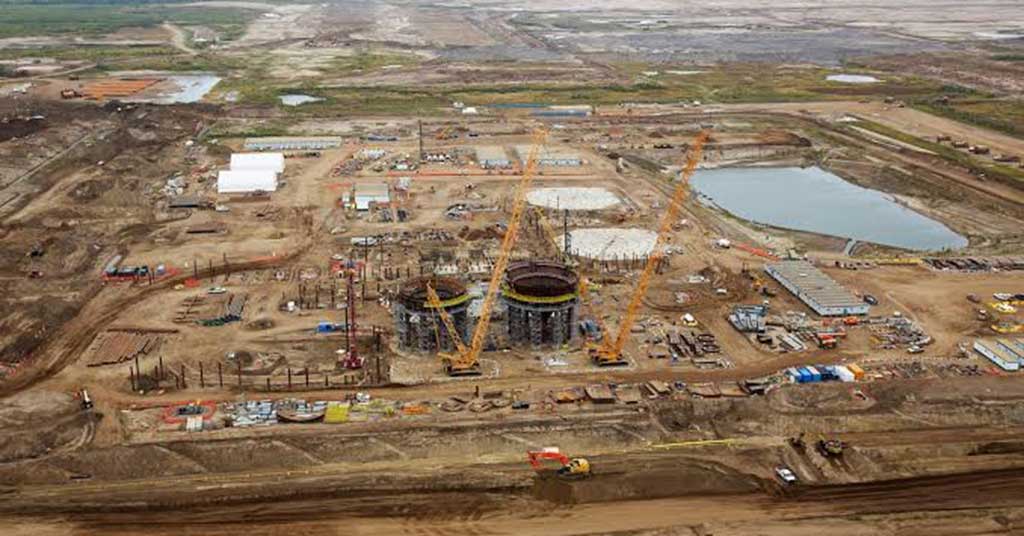
In October 2025, Fort McKay and Suncor announced an agreement allowing the company to use part of the reserve for overburden and reclamation materials. The agreement does not authorize an oil sands mine, but it marks another development in their long-standing relationship.
Maintaining those relationships also means finding ways to address disagreements. Zebedee emphasized the importance of having a process that allows companies and First Nations to discuss concerns and work toward solutions.
“You have to have a forum to generate the appropriate dialogue and to ensure that where there are concerns, they are brought forward to the table and they are discussed and resolved mutually,” he said.
Early discussions cannot eliminate disagreements, but they can help companies and First Nations resolve concerns before they become prolonged disputes.
Powder also described the importance of maintaining relationships with governments and stakeholders, preferring dialogue over litigation to resolve disagreements and create opportunities for Fort McKay First Nation.
Gladu also discussed the federal Major Projects Office, where he serves on the Indigenous Advisory Council. The office helps co-ordinate federal approvals and financing for major projects, while the council advises on Indigenous perspectives and economic participation.
Zebedee also pointed to financing as a barrier to greater Indigenous ownership. He stressed the importance of Indigenous loan guarantee programs, which can help communities secure financing to acquire ownership stakes. Such programs could allow more First Nations to move beyond employment and procurement to share directly in a project’s long-term economic success.
The Fort McKay–Suncor relationship shows what can become possible when companies and First Nations invest in long-term partnerships, respect community priorities and turn commitments into action. As Canada considers new energy projects, those relationships could open the door to greater Indigenous leadership, ownership and a stronger role in shaping the country’s energy future.
Maureen McCall is an energy business analyst. She writes on energy issues for EnergyNow and the BOE Report. She has 20 years of experience as a business analyst for national and international energy companies in Canada.
Explore more on Aboriginal Business, Aboriginal reconciliation, Energy sector
The views, opinions, and positions expressed by our columnists and contributors are solely their own and do not necessarily reflect those of our publication.
Troy Media empowers Canadian community news outlets by providing independent, insightful analysis and commentary. Our mission is to support local media in helping Canadians stay informed and engaged by delivering reliable content that strengthens community connections and deepens understanding across the country.

